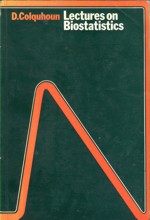
Download Lectures on Biostatistics (1971). Corrected and searchable version of Google books edition
Download review of Lectures on Biostatistics (THES, 1973).
DC’s front page
Look at the right hand sidebar for the latest pages, posts and comments.
First-time comments are moderated: after that they appear straight away.
This blog is written by David Colquhoun. You can Email me.
Jump to Latest diary entry Click here.
Updates. To get a brief email when new items added, check the box in the Comment box on any page. You can also email be directly by clicking here.
Twitter feed is in left sidebar, below ‘recently read’.
Updates on Twitter @david_colquhoun. Follow @david_colquhoun
.
Notice. The huge traffic generated by the posting of Stefan Grimm’s last email brought down the server for an hour or two on December 3rd. Since it went up at 18.30 on 2nd December, it has been getting a hit every second or so. This has been cured by introduction of a caching system, but this had the side effect of breaking links to most of the pictures and documents on this blog. I now have to correct the links manually on 386 posts and 17 pages. This will take a while to complete.
Truly gobsmacked to find this blog got first prize at the Good Thinking Society UK science blog event. It was shared with PhD student, Suzi Gage @soozaphone. We must have been the youngest and the oldest entrants. More in the diary.
|
|
 |

|
Not sure what I did to get this from the New Statesman. Perhaps it was some comments about David Willetts?.
|
 |
Another unsolicited testimonial: this blog appeared in the Sunday Times guide to the 100 best blogs (May 2009)
This blog is archived by the British Library.
22 December 2012. A post in 2006, now removed, criticised the organisation CancerActive, for selling D-mannose and Chloralla with the suggestion that they might help people with cancer. In May 2012, I added to that post a quotation from one of several authors who claimed that there was an a priori case for investigating the relationship between the business and the charitable activities of CancerActive. Mr Woollams then threated to sue me for defamation. As a consequence, the original post has been removed and I am required to publish the following apology. It’s better than destitution.
7 November 2013. My agreement with Chris Woollams’ lawyers was that the apology should be shown for 6 months. It has now been up for almost 11 months. I am, therefore, removing it. It was, of course, bullied out of me by the threat of destitution. Now, thanks in part to people like him, we have a new Defamation Act. This sort of thing should be much less common in the future.
DC’s Improbable Science., at dcscience.net, now comes from a server powered by those wonderful people at The Positive Internet Company. I am enormously grateful to Alex Lomas for his expert help in making the move.
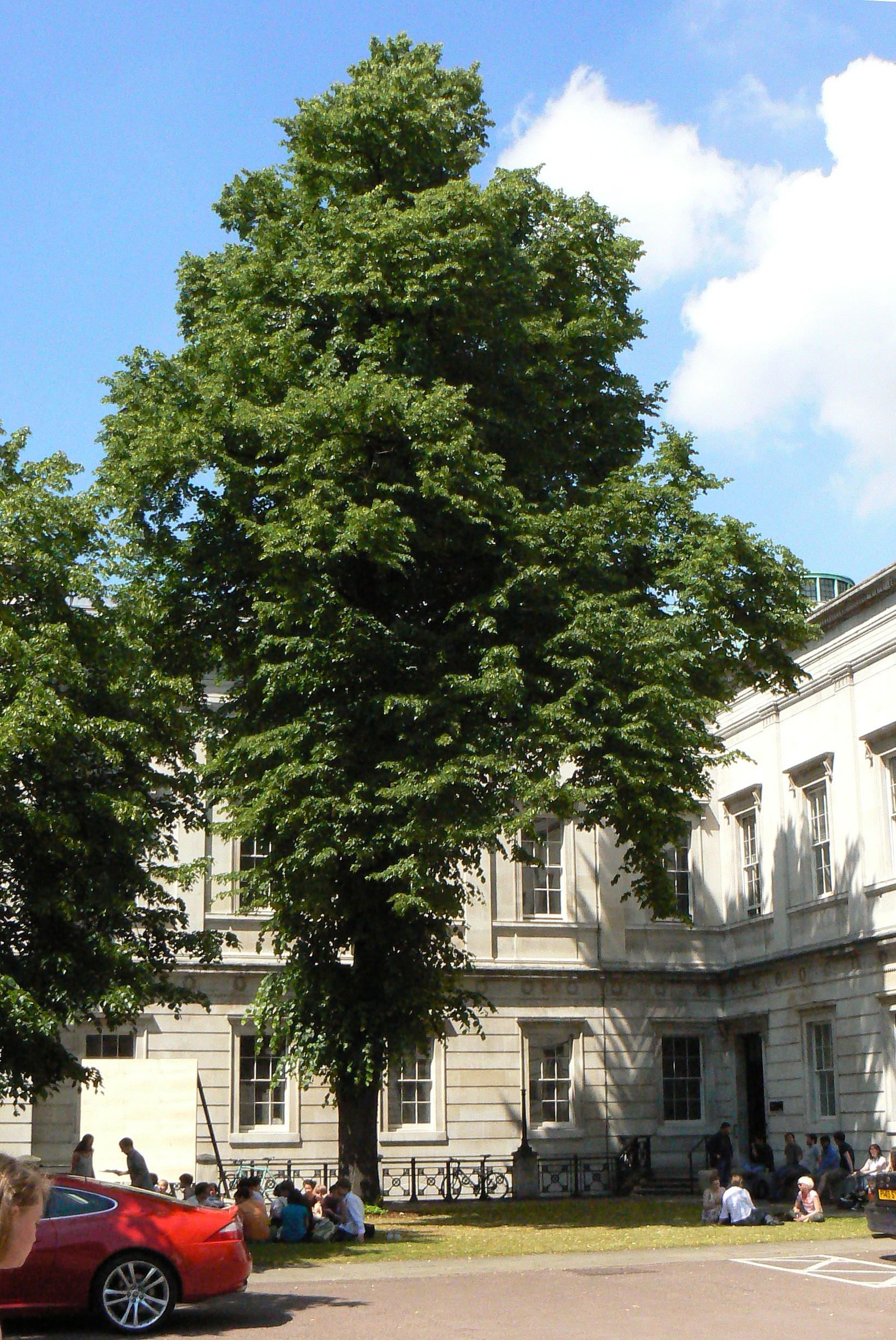
Lime tree in UCL quad, under which I have lunch and talk in summer.
(Older pictures here)
click picture to enlarge
Click picture to watch the Sherlock Holmes video clip (ITV)
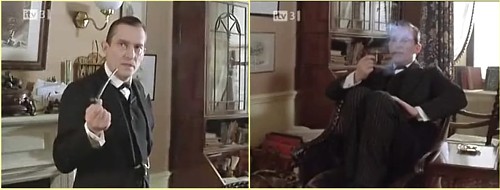
“What are you going to do, then?” I [Watson] asked. “To smoke,” he [Holmes] answered. “It is quite a three-pipe problem, and I beg that you won’t speak to me for fifty minutes.” The Red-Headed League. Adventures of Sherlock Holmes, Arthur Conan-Doyle. Posted after seeing Roger Llewellyn in The Death and Life of Sherlock Holmes.
This WordPress blog continues, in a new format, the original DC’s IMPROBABLE SCIENCE Page. Older entries from there are being transferred here as time allows.
This blog now incorporates ‘DC’s goodscience’, which was centred on university politics, in particular, how science should be organised to get the best results, and the invidious rise of management bollocks and corporatisation. It was started as a vehicle for an extended version of an article that I wrote for the Times Higher Education Supplement, HOW TO GET GOOD SCIENCE. This extended version has now been printed in full in the Physiology News, 69, 12 – 14, 2007 [download the pdf version].

News items.
Guardian science podcast is here.
A paper that came out in 2008 was the most fascinating I’ve been involved in for years. On the nature of partial agonism in the nicotinic receptor superfamily. This is the day job, and so not mentioned much here. But this one represents over three years of hard work, especially by Remigijus Lape, and for once it came out well -positively sexy (if you like ion channels). It featured on UCL News. See also the News and Views in Nature and Making the paper in Nature.
UCL Lunch hour lecture. 16 October, 2007.Science in an Age of Delusions: some examples from scientific fraud, quackery, religion and university politics.
See it here. [Seems that this got the biggest audience of the 2007 lectures]
- Wikipedia
- Interview in Molecular Interventions (2002)
- Society for Neuroscience, scholars
Some older sites (really they are all about various consequences of the endarkenment). None of these are now maintained.
- DC’s Improbable Science page
- DC’s politics page
- Education and religion
- Committee for UCL. The pages that helped to thwart the 2002 attempt to merge UCL into Imperial.
- Save UCL. The much wittier and more elegant site written by a Graduate student at the time of the 2002 takeover attempt by Imperial. See especially “ask Jeremy“.
My day job pages
- My original home page (no longer maintained)
- My corporate home page
- OneMol New site: a one stop shop for the single ion channel group at UCL, http://www.onemol.org.uk/
- Our Publications page
- Publications -theoretical papers
- Our computer programs for analysis of single ion channel results (now on the OneMol site: the UCL site is defunct).
- Our summer course on matrix algebra, with applications to analysis of stochastic properties of single ion channels
- UCL photo pages
Here is a movie, made by Faculti, about my day job. You can get reprints of the 2004 and 2008 papers form the OneMol site.
I just noticed that the ResearcherID button, above, takes you to a site that doesn’t list my most highly cited work. Like other commercial sites it fails to list citations to books or book chapters. Google does that better, and cheaper.
 Submit to StumbleUpon
This page has been loadedtimes.
[reached the first half-million on July 3rd 2008]

On the contrary, I do know the difference. Frequently, though, a reasonable clinical audit provides some start points for research, which in turn leads to more accurate audit. It seems that a decent start point for research in acupuncture and IVF eludes us, so a crude assessment might, at least, give us a direction. Please note I said CA is “a vital part in generating evidence”. Not the only way. My qualifications are not self proclaimed. They exist.
Much to my dismay the GRASP trial is about to be published and the conclusion is stated to be:
“The pragmatic GRASP trial showed that Chinese acupuncture is an effective alternative to conventional standard therapy in chronic shoulder pain. Fifteen Chinese acupuncture treatments over 6 weeks are more effective than conventional standard therapy with NSAIDs and physiotherapy. After the end of treatment, the therapeutic effect of acupuncture lasts for 3 months. The pragmatic trial shows that verum acupuncture is more effective than sham acupuncture at non-verum points located far away from the verum acupuncture points.”
German Randomized Acupuncture Trial for chronic shoulder pain (GRASP) – A pragmatic, controlled, patient-blinded, multi-centre trial in an outpatient care environment. Albrecht F. Molsbergera, Thomas Schneiderb, Hermann Gotthardtc, Attyla Drabikde 2010 Pain in press.
This will no doubt open the flood gates for acupuncturists who will claim that it proves that acupuncture is better than conventional therapy (or doing nothing). The trial was (of course) flawed by not controlling for patient and practitioner expectation and lack of practitioner blinding. Can good science ever hope to prevail?
@Mark Cannell
Interesting report. I share your concerns about potential trial flaws.
I do find it frustrating though when non-verum points in acupuncture (i.e. non-Traditional Chinese points) are referred to as ‘sham’.
Counter-irritation using sharp objects such as acupuncture needles can have a modest analgesic effect.
It’s not really an argument whether acupuncture can provide pain relief (it can). It is more a question of whether is is any more effective than paracetamol.
The so called verum points issue is a red herring.
@ Dudeistan
“Counter-irritation using sharp objects such as acupuncture needles can have a modest analgesic effect.”
Just to be clear that we understand you fully here, Dud, are you saying that, in pain control at least, there’s a principle that “like cures like”?
@skepto_troll
No, not Dud (even if you think I am a dud). It’s Dude. That, or Duder. His Dudeness. Or El Duderino, if you know, you’re not into the whole brevity thing.
Like cures like? I don’t know.
However stimulating mylenated sensory nerves can trigger a natural release of opiates across the blood brain barrier.
But then is sensory stimulation for pain relief any more effective than taking paracetamol for your pain?
Probably yes, given that paracetamol doesn’t have any theatrical ‘aura’ to it.
http://www.dcscience.net/
@Dudeistanissimo
Du, du bist keine Blindgänger, schon verstimt! (excuse my poor German)
Natural release of endorphins, eh?
Natural medicine! Great! Give me some of that!
Probably kinder on the liver than big doses of paracetamol, too.
But hey, what about morphine? Pharmed version of natural herbal medicine, so no unwanted effects there either, eh? 😎
On that principle, I suppose one might use heat shock, too, or just bayonet some one.
That would make that root canal treatment so much more interesting!
But primum non nocere, I suppose.
Another effect is that each time you needle someone, it lowers their blood pressure a point or two. The Chinese may be more tolerant of this, but lower your bp enough & you’re out of it.
That’s effective, too.
And there’s the observed effect that people who use acu or mesmeric (let’s not get confused with hypnotics) methods seem to recover better, with fewer undesirable sequelae. (Forgive me if I’m not going to quote paper on this.)
So far as a clean experimental design is concerned, there are other things to be considered, like nerve blocking, referred pain, neurasthenias, parasthenias, suggestibility (in the mesmeric sense), and induced meditative states.
So, yes, what exactly is one showing if one does a trial like this?
It does really seem to highlight the inadequacies of the specific-single-diagnosis/ single-intervention / narrow-outcome dbpc trial system. (SSD/SI/NO-DBPCT?)
Of course,
> Cannel
is being faintly ridiculous when he can’t accept a trial result because his belief system doesn’t admit the result. He should be careful lest he ends up with chronic shoulder pain from shifting all those goal posts.
The thought has just struck me that one might use blind acupucturists….
Blind patients? Too specific a group.
Blinded scientists, maybe…
If one is to do a genuine trial of this kind, maybe one has to take a deep breath and step into the field a little.
A truly sceptical evidence seeker is going to have to question ‘established medical knowledge’ (Wot’s Overwhelmingly Obvious – WOO) and accept that a result might not be as they would like it to be.
Sham points (whatever they might be) simply will not do, for reasons I’ve outlined. It’s silly.
It’s the infantile thought of some one who can see no further than the needle-sticking (eurrgh?), and can’t begin to imagine what those funny oriental gentlemen might be about apart from that.
That the oriental gentlemen may have put a few thousand years into refining their ideas is completely beyond such people.
Missing the point, sort of.
But, Hey, buddy, if it’s connected to my sensory nervous system, you’ better know what you’re doing, or use a sham needle, or else!
But some acu points are not in sensitive places. It’s generally bad form to go for the nerves, I understand. Or the arteries. Unless you’re a sham scientist, that is.
So one ends up maybe having to a genuine honest test using a ‘whole alternative system’ approach instead of a specific misundertood part of it.
And a broad outcome study.
All very inconvenient.
Worshippers of the SSD/SI/NO-DBPCT are not going to like that. Not at all.
Ich fürchte, ich verstehe nicht, worauf Sie hinauswollen.
Ich bin auch manchmal sehr Angst vor spitze Sachen?
Ich habe kein Google-Deutsch,
Ich habe nur Babel-Deutsch E:-D
Very amusing example of how interpretations can differ, but has strayed somewhat from the point, I think.
The exercise is to design a meaningful trial
for a discipline which is incompatible with one’s accustomed mode of thought, like a dolphin-translator.
Perhaps dolphins do not converse. But perhaps they discuss cosmology & fish. And the weather.
Answers on a blog, please..
@skepto_troll
“Ich bin auch manchmal sehr Angst vor spitze Sachen?”
I was being ironic. Please don’t reply.
Ah, irony.
I mistook it for something else.
Dud after all. Never mind.
To move on.
@everybody:
The question remains, how to design a meaningful trial for a discipline which is incompatible with one’s accustomed mode of thought.
Come on, it’s not difficult.
“a meaningful trial for a discipline which is incompatible with one’s accustomed mode of thought”
Hmmm…
You want to meaningfully assess a “discipline” that is incompatible with the way meaning means things.
Bit of cheek terming it a discipline, under the circumstances, wouldn’t you agree?
Cheek ? Not really. Inquiry.
Circumstances? You mean the conclusions of the GRASP trial (whatever)?
How would you define a discipline,
Eric 1/2 ?
(You can say what you mean by “mean”, too, if you like 😀 )
No, I want you to ‘assess’, not by merely insulting it, a ‘discipline’ with which you are unfamiliar, and which you suspect is incompatible with your own deeply revered superstitions.
Your word, “assess”; I was a little more precise, and fitted to the audience. If I can be more clear:
Please attempt to design a trial (of some overlapping part of the mutual experience), which will either make the average pseudo-sceptic sit bolt upright and say to himself, “My God , I was wrong, there really is something in this, after all” (Well, probably not “My God”, but whatever a pseudo-sceptic takes in vain at these moments),
or, by contrast, will make the average practitioner or beneficiary(?) of said ‘discipline’ in his or her own way, say to themselves, “Yes, I see your point, I shall now give this up for ever!”.
Of course, one has to allow a little room for evidence that is at first superficially attractive, but on consideration is faulted.
That can be forgiven.
There are a numerous things that are more difficult to forgive, such as continuing to pick fault even when your stipulations have been fulfilled, fixing the trial or results in your own favour, or the prior determination that one will only be convinced when Hell freezes over (or whatever a pseudo-skepo freezes over on the these occasions).
Come on, it can’t be that difficult.
@skepto_troll
The answer to your question is very easy, The way to test homeopathy properly can be found in the newspapers (A kind of magic?, by Ben Goldacre, Guardian, 2007).
If a large trial done by that method were to give a strongly positive result, and that result could be replicated in a couple of other places, than I’d change my mind about homeopathy entirely.
The fact that this has not happened, and that most homeopaths are unwilling to do it, suggests to me that they know, in their heart of hearts, that the test would be failed. The big homeopathic companies have plenty of money to do proper tests, and so end the arguments, and make even more money than they already do. Have you neve asked yourself why the big business people in homeopathy (Boiron, Weleda etc) are so reluctant to test what they sell?
“If a large trial done by that method were to give a strongly positive result, and that result could be replicated in a couple of other places, than I’d change my mind about homeopathy entirely.”
I’m shocked! I certainly wouldn’t. Even if such miraculous results from a set of ostensibly well-controlled large trials of some one supposed ‘homeopathic remedy’ were ever obtained, I’d still assume there to be a true explanation other than the absurd homeopathic one.
@DC
May I first thank you, David, and other moderators here, for allowing me a voice in this oasis of rational thought.
It is not so in all blogs of this faction, sad to say.
I have already felt like a spectre at the feast, disturbing the peaceful calm of those who come to relax and swap anecdotes in the company of like-minded friends.
I suppose we who are sceptical of the conventional knowledge of the age will come and go, but I hope we may pass the time in fruitful discussion, and perhaps advance a little in some way.
Yes, I have on occasion asked manufacturers why, given that they must presumably be in profit, they cannot produce some acceptable ‘proof’ for us, why sometimes they are making claims that don’t stack up. From time to time I have proposed suggestions about what might be better. It would be to the benefit of all.
Often they continue to plead poverty. Very often the CAM sector has small, insecure outfits, without the backing of huge moolah available to the competition.
Of course, on a rational basis, Welada, with its’ nicely eccentric outlook, and Boiron, with its thriving market in ducks, have little to gain from taking any such business risk, lest they have to turn to selling jewellery instead. The shareholders would not be pleased.
That would be like over-reacting to reports of the odd few deaths from the cox-1 component of a cox-2 ACE inhibitor, or psychoses induced by a chinchona extract analogue designed to combat P. falciparum, all before the coffers are filled and it’s your only source of income. (There’s that natural medicine again!)
And I am constantly disappointed by the existence of enthusiastic reports of the latest miracle product in what are really marketing zines.
But that would be to ignore a swathe of reasonably well-conducted research in the more respectable CAM journals (yes, we might disagree on that one).
One could make similar observations about the conventional sector, if one could be bothered, especially prior to the Lancet decision to force registration of tests.
(I wonder where the loopholes are in that? I can think of a way..) How carefully do they quantise undesirable effects in a population, for example.
More on the subject of credible proof, as the Americans say, momentarily.
Yes, as I said, it’s not difficult, it just requires some clarity about exactly what one is showing with a demonstration, and the pitfalls of missing alternative hypotheses.
I was following the comments on acupuncture, of course, but since your thoughts have strayed to homeopathy, I am happy to pick that up as well.
We can cover the other points later.
Thank you, I have just read Ben Goldacre’s article, and the article which apparently gave rise to it: In defence of homeopathy by Jeanette Winterson http://www.guardian.co.uk/science/2007/nov/16/sciencenews.g2
(“a temperature of 102, spots on my throat, delirium …. remedy called Lachesis, ….. Four hours later I have no symptoms whatsoever.”)
Yes, there certainly is some sloppy thinking there, and Ms. Winterson’s article has some problems with it, too.
I shall try not to criticise BenGoldacre to too deeply in his absense (?), but I counted a number of Aunts Sally – or perhaps just the one straw man of multiple personality – and the odd exaggerated claim, maybe a couple of idées fixes (I’m being imprecise, here) in his extended monologue. But he does try hard.
Going out on a limb here, and I don’t mean to insult your integrity on the matter, but I’m going to suggest that even if his trial design, enacted a few times, showed sparkling results in favour of homeopathic effect (unlikely, implausible though it may seem), that you and others might well still be looking for the fundamental flaw in it for some time to come..
Conversely, well, not everyone has faith in the gold standard.
And I’m already out on a limb in following your enthusiasm for SSD/SI/NO-DBPCTs rather than more rounded outcome studies in a clinical setting.
Leaving aside for the moment the question, “would this get past an ethics committee?”,
what exactly is Ben’s hypothesis, there, do you think? Is it a startlingly worthwhile piece of science for funding?
Is this a real test of homeopathy as a therapy?
Are we looking at self-limiting, treatable, (or undergoing treatment), curable, incurable or delusional cases? (And why does that matter?)
Would it prove or disprove the homeopaths’ extraordinary claim that, even in this day, homeopathy, not ‘allopathy’ is the superior medical system?
Could we define ‘outcome’ a little better than ‘does just as well’? Perhaps follow up a bit better.
And perhaps at least carefully define the placebo?
And be precise about protocols, the environment, contamination.
What would be the effect on the sample of knowing placebos were involved?
On a darker point, how might one obviate fraud? There’s certainly a faction who are angrily adamant that H~thy is a fraud anyway, so it’s fair game to disrupt a trial. Are there any holes for the underhanded financial giants of homeopathic pharmacy to exploit?
I might observe that his kind of trial goes on constantly, in any case.
Of every 200 individuals that purchase some little pills from an established homeopathic pharmacy, the half that I see may well be taking an effective remedy (sadly, not always necessarily the most appropriate remedy according to the doctrine) and are going to get better, the other 100 that you see are just taking an imaginary “IllPlease”, and are going to die.
Naturally, most of them are there because they distrust the proof offered for conventional medicine, or else doctors have told them they are “‘incurable'”, or they are suffering from persistent undesired effects from a piece of EBM they’ve been given earlier. Or they’re just imagining it.
@phayes
If well controlled repeatable RCTs demonstrated consistently good clinical effect for homeopathy then that would imply there is clinical value to homeopathy. Such tests would not establish why it works, simply that it does.
Of course, to date studies do not show a convincing clinical effect.
However, in theory, in the unlikely event that homeopathy passed clinical scrutiny it would be the job of scientists to establish a reason for its clinical efficacy.
Clearly there is not point in them bothering to do that if we agree that homeopathy has no clinical value as seems to the case.
@Dudeistan
“If well controlled repeatable RCTs demonstrated consistently good clinical effect for homeopathy then that would imply there is clinical value to homeopathy. Such tests would not establish why it works, simply that it does.”
I strongly disagree, and it’s got nothing to do with failure to discover exactly how it ‘works’, but rather more fundamentally with whether it is remotely reasonable to believe it could work at all. A clinical trial of some homeopathic ‘remedy’ is implicitly also a grossly inappropriately clumsy experiment presuming to be able to establish the existence of a substantial difference between magic homeopathic water and ordinary water. But that is something it simply cannot do. As Alan Sokal puts it:
“In short, all the millions of experiments confirming modern physics and chemistry also constitute powerful evidence against homeopathy. For this reason, the flaw in the justification of homeopathy is not merely the lack of statistical evidence showing the efficacy of homeopathic remedies over placebo at the 95% or 99% confidence level. Even an experiment at the 99.9% confidence level would not begin to compete with all the evidence in favor of modern physics and chemistry.”
Homeopathy clinical trials are futile and unethical pathological science. The poor deluded homeopaths would need to show us how to easily and reliably distinguish a drop of water with ‘no’ molecules of X from a drop with ‘no’ molecules of Y (or a control) in the lab. before they could even begin to hope for their maximally absurd, ugly and stupid fantasy medicine/science to be taken seriously.
See also this very good article:
http://www.sciencebasedmedicine.org/?p=42
It doesn’t go so far as to contemplate how (I believe) one should interpret the hypothetical situation being discussed here – the (replicated) strong positive result from a large trial of some homeopathic ‘medicine’ – but it should give you some idea of why I’m honestly not joking when I say that I’d consider it more likely to have been due to a prank by extraterrestrial medical students (veterinary students?) than due to the effect of the homeopathic pills.
Uh… That should’ve been “due to the effect of homeopathic pills” rather than “due to the effect of the homeopathic pills”, obviously.
@phayes
I did stress “well controlled repeatable RCTs [that] demonstrate consistently good clinical effect”, not ad hoc half-baked biased trials.
However I agree with your argument that to set out to test something that clearly makes no scientific sense could be seen as futile.
Bu then it isn’t futile, as how else would we persuade gullible consumers and politicians that its all hokum?
@dudeistan
“I did stress “well controlled repeatable RCTs [that] demonstrate consistently good clinical effect””
Yes, and I tried to explain why it doesn’t matter. A clinical trial simply cannot be large and well-controlled enough to be able to demonstrate the truth of a claim contradicting a vast body of intrinsically much more powerful evidence.
“how else would we persuade gullible consumers and politicians that its all hokum?”
I don’t see how anyone could possibly remain unpersuaded by the rock-solid evidence of a couple of centuries of genuine science – much of which they should’ve already learnt in school – together with knowledge of the “chain of implausibility”¹ involved in the ludicrous homeopathic delusion. Unless they are as barking as a homeopath themselves, of course.
I can’t stress enough: a homeopathy clinical trial is a futile and unethical cart-before-the-horse exercise in pathological science, and pretending otherwise, perhaps just because we don’t want to be too mean to the poor quacks and deny them credibility and hope, is unethical too if it encourages them to continue to carry out such trials. Their bizarre delusions don’t really even merit testing in the laboratory but they sure as hell don’t belong anywhere near a clinical trial setting.
¹ http://www.theness.com/neurologicablog/?p=40
@phayes
I understand your argument as it is logical and scientifically sound as a pound
I suppose I am looking at the issue from a purely pragmatic point of view.
@ Brothers Grimm
Oh, I’m sooo glad I came!
Have you seen the man in the motor car?
Look Behind You!!!
My memory of these things is a bit vague.
Are you going to do the one where Dick decides to give up economics, but encounters a band of Maoist thought-reformers, and is persuaded to return to make his fortune in pharmaceuticals? Something to do with socks, I think.
OH, no is isn’t!
Oh, yes it is!
Yes, the man on the motor car.
He’s driving this big, powerful machine, you see, protected from the outside environment by all that shiny plastic & steel,
trying to get down the road just a bit faster than the next guy.
The shell has a strange effect on the psychology, makes him feel invulnerable.
Like the Zeitgeist thing (Google German).
What gets in his way just makes him mad. Mad. maaaad m ad maa….
d.
And there’s that pedestrian.
Absurd thing.
In my way.
Heee’s innn myy waaaay!
How can he expect to get about like that, he hasn’t even got wheels!
Baaarp, baaarp!
Oops, blind spot, Your Honour.
I’ll be back, I’m getting through some enjoyable reading.
Who’s playing the Dame?
“There is nothing like a dame. Nothing in the world. There is nothing you can name that is anything like a dame”
Ben Goldacre told the Commons Committee/enquiry into homeopathy that there were a little over two hundred RCT showing nothing positive for homeopathy beyond placaebo. Get RCting.
PS When driving plase note “Objects behind you may be closer than you think.”
Remind me, andrew, how many of the committee were persuaded by Ben’s argument?
Have you read any of those trials?
How many were of ‘ultra dilutions’, ‘vigorously shaken’?
(Homeopaths don’t do that, you see, they have this idea that they produce ‘potencies’ by a rather precise ritual – lets call it a correct protocol. So, they aren’t going to be impressed much.)
I won’t go on too much about this just now, but if you are going to test a hypothesis, it’s as well to test that hypothesis, rather than a prejudiced interpretation of it. If you want to make an honest scientist, that is.
Any outcome studies there, by the way?
But thanks for introducing nothing, much, into the discussion 0:-)
@phayes
I am sure you have spotted the latest link on the Home Page; George Lundberg (there is no alternative medicine).
His states his three criteria for assessing treatments:
1. You have a test or treatment that has itself been tested and found to be safe and effective. Use it; pay for it.
2. You have a test or treatment that has been found to be unsafe or ineffective. Don’t use it; don’t pay for it.
3. You have a test or treatment that is SCIENTIFICALLY PLAUSIBLE, meaning not preposterous. Test it AND then put it into one of the other two piles.
This neatly supports your argument.
The report is here : http://www.parliament.uk/business/committees/committees-archive/science-technology/s-t-homeopathy-inquiry/
The were 14 people on the committee, but I don’t know how many were persuaded by Ben’s arguement.
However big the majority, conclusion 11 page44 states “In our view, the systematic reviews and meta-analyses conclusively demonstrate that
homeopathic products perform no better than placebos. (Paragraph 70)”.
That is the key point surely ?
I have n’t read the trials and I don’t know how many of ‘ultra dilutions’ or ‘vigorously shaken’.
I agree with you about hypothesis testing though.
@ Brothers Grimm
Oh, aren’t the responses to that simply wonderful!
Re: DC Ref “There is no Alternative Medicine” Geo Lundbergtroll
medpagetoday.com/Columns/21819
How can so many errors seep into any rational person’s thought?
If I allowed to quote:
“All the studies found exactly the same thing: if the original dodgy fact fits with your prejudices, a correction only reinforces these even more. If your goal is to move opinion, then this depressing finding suggests that smears work, and what’s more, corrections don’t challenge them much: because for people who already agree with you, it only make them agree even more.”
Ben Goldacre, The Guardian, Saturday 1 May 2010
http://www.badscience.net/2010/05/evidence-based-smear-campaigns/
@andrew
You know the Ctrl+C, Ctrl+V Copy/Paste thing?
Have you tried Ctrl+C, Ctrl+W?
A biased view of largely biased investigations doesn’t really count for much, IMNSHO
(But perhaps I’m being unfair.)
I found this:
//avilian.co.uk/2010/02/homeopathy-british-justice-or-british-bullying/
But that would be ‘not to understand’ the steaming pile of importance of EBM, of course.
Thank you for the agreement on the actual good science bit, however.
It’s encouraging.
Keep it up.
That is the key point surely ?
(C & P’d, ibid)
@andrew
I located this for you:
//www.homeopathyeurope.org/news-and-press/news/ech-rebuffs-uk-parliamentary-committee-report
which reports a vote of
3 in favour, 1 dissenter out of the 14,
and reports that “One of its three signatories has stridently campaigned against homeopathy …”.
No prejudice there, then.
@Dudeistan
Yes – I watched it. But I don’t think it’s support for my argument: Lundberg doesn’t say exactly *why* one shouldn’t test a highly implausible treatment but I’d guess his reasons would more likely be of the usual EBM-motivated pragmatic and ethical kind than the recognition that such a test would not in fact be a test at all (except under appropriately highly implausible conditions!).
Anyway, due to the content of some of the comments here 😉 I thought a sanity-restoring Feynman chaser might be appreciated:
mmst://Mv-helix1.cwru.edu/a/physics/kavli_cerca_weinberg_lecture.wmv
(Just for a change it’s actually Weinberg not Feynman this time).
@skepto-troll
No, not that Dick; it was the other one with the cat.
Cat in a box, it was, only you have to open the box to see if it’s smiling or not. Years ago, can’t be certain.
Put the back out a bit, hanging on the eves.
It’ a Troll thing.
Does anyone know a good chiropractor?
I heard there’s this Sikh fellow, wonderful with backs. Got a nerve, trapped? Pain in the neck? Colic? No trouble at all. He’s just the man you want. Just harangues the vertebrae until they all get into line, I’m told. Safe as can be, as safe as going to any other doc. in a white coat.
Is he still around, anyone know? Or did he move on to that other outfit? Keep Fundamental Laws out of Physics, I think it was,
( He_hit_me.back.com ? I just get server not found.)
I think he must have some troll genes in there, somewhere.
Sorely missed, that Dick. Feynman. Fell into bad company, magicians & the like. Bad influences. But it’s only right that he should have enjoyed himself at the end.
If you’d asked him how someone had fixed an experiment to ensure it failed, he’d have got it. If you’d set him the problem, that is. Rara avis.
Perhaps he’s smiling down at us all, right now. Or working at his next chapter on the memory of water.
I was in the WHSmug’s the other day. The 7th it must have been. When my attention strayed off the top shelf to a copy of New Scientist, and this wonderful contention that the latest incarnation of the Standard Model isn’t really broken at all, it’s just a trick of the light, a bad run of the dice. Something about things being counter-intuitive, & inference throwing up wobbly advice. Andrew Pontzen & Hiranya Peiris, it was. Couldn’t make the names up, really. (Excuse me, Troll humour.)
Have you seen what they’re doing up at Cosmo recently? It seems they’ve lost the plot; well, three-quarters of it, anyway, and people have been demanding an explanation. Up to negative energy, dark radiation, all sorts of woo, to see if they can find it again.
Inference, massively important there.
Negative energy can really mess up your life, I’m told. No matter.
Or was it the one where the Emperor is trying to explain the Altogether? It’s all such a long time ago, it seems like the beginning of time.
Something about the very fabric of existence being so fine you can’t see it.
Makes you wonder about whether you really know what you think you know about what you actually know you know.
At least I do know, if I’ve seen something actually work, over and over, that it does work. Well, from this side, it does.
And all those other people who’ve seen it work as well, they know it works, too.
Nay-sayers can come up with all sorts of fancy, contrived explanations of why you just imagined a method works,
but why would the Creator come up with so many conjurors?
I’m talking about methodical DBPCTs, of course. God-given.
@skepto_troll
“Up to negative energy, dark radiation, all sorts of woo,”
If I told you that I’m well aware that my much-more-likely-than-homeopathy extraterrestrial medical students would almost certainly need just that kind of ‘woo’ to be able to get here in the first place, would it make *you* “wonder about whether you really know what you think you know…”?
http://en.wikipedia.org/wiki/Alcubierre_drive#Difficulties
The crackpots’ and quacks’ incessant whining about “closed-minded ignorance” is extremely ironic.
@skepto_troll (re:http://www.dcscience.net/?cpage=3#comment-7387)
Maybe I shouldn’t feed the troll but I’m surprise no-one has picked you up on your pleading that someone should be able to design a fair way of testing a “discipline they do not respect/understand”.
There are a number of things as fault with the way this question has even been asked, most significantly the use of the potentially loaded term “respect”. You seem to be of the opinion that only those versed in a discipline are best placed to assess it, which is patently wrong, and suggests you want a special treatment for certain disciplines. This is tantamount to stating that certain “belief systems” are outside the realm of science which, again, is simply a prima facie incorrect assertion.
Moreover, attempts made to understand a closed-book system are in fact best made by those outside of it. They are likely to be able to be more objective about it since they have no vested interest in propping up something they don’t currently subscribe to. Any failure to gain a true understanding does strongly suggest the subject under test lacks any verifiable, repeatable, demonstrable effectiveness. And so it does, indeed, remain “outside of science”. Some call this realm magic; I call it bullshit.
Every statement along the lines of “CAM practice X cannot be tested as scientists don’t understand the realm in which it operates” just serves to paint the whole business into a corner of logical absurdity.
We are each entitled to our own opinions but not our own facts, and the evidence base, such as it is, for CAM practices, makes for a pretty thin reading.
If you can’t see that there is no point attempting to explore this topic any further.
:-@phayes
Hoorah! First mention of “closed-minded ignorance” here!
And “crackpot” too!
Ventral prefrontal cortex problem? I don’t know, just visiting.
E:-0 You have extra-terrestrial students?? Are they humanoid?
Actually, yes, it does make me wonder too. Still learning.
Yes I know the design. All very yin/yang, but how to set it up?
Pass the di- Lithium crystals!
Or just the plain old Lithium Carbonate, maybe. Trace elements in food, all sorts of disproportionate effects.
~~~~~~~~~~~~~~~~~~~~~~~~~~~
A little light entertainment to calm the spirits;
after the old Oscar Brand ditty & sometime rugby song
(vide Youtube.com/watch?v=ls_nPA8o71A)
To the tune of “Johnny’s So Long at the Fair”:
“Oh, Dear, where can the matter be?
locked in thought from Monday to Saturday,
Teasing out alternate realities,
Nobody knew they were there!”
“Wish I had been a Professor of Chemistry!
Nothing at all to appear as a mystery,
All anecdote I’d consign into History,
No-one would know it was there!”
(Repeats chorus)
~~~~~~~~~~~~~~~~~~~~~~~~~~~
I’m only here to take the epistemiology, of course.
@pberry
It’s not just altmed advocates that seem to want to be treated in a special way. I sometimes wonder whether quantum physicists also behave like this – but then I am in danger now of going off topic.
@skepto_troll
Are you a bit piddled when you write your entires?
@skepto_troll
Thanks for the links @ #132 & 133. However mind stretching and enthralling I find your blogs, nothing changed my mind. Still all #129 Lundgerg category 2 stuff.
Went to see Avatar at the Imax with an old friend.
Quite engaging. I think you’d hate it.
I could possibly identify with any central character known as Scaum; after watching the film for a bit, you might prefer Parker or Colonel Quaritch.
I couldn’t help but test my cognition with the 3d specs reversed.
Fascinating; as expected, my brain automatically corrected for human images, but had more trouble with the contextual backgrounds.
It goes to show that you can design instruments to see what you want to see, misapply them, and still see what you’d thought you’d see in the first place.
Cognitive dissonance. Now, there’s a thought.
Reverse order:
@andrew
Yes, the S&T subject-poaching starts to look less impressive after that.
Yes, nothing has a way of doing that.
Lundgurg, trite. Consider HepC.
There are better strategies for risk-based medical decision taking, but they are probably inaccessible to the average victim. Patient.
@Dudeistan
Entires? Piddled?
@pberry
I spent some time re-reading, searching right through for \discip\ \respect\ & \underst\ to identify what I am supposed to have said.
Then I just thought, intellectual equivalent of birdsong.
@pberry
Sorry, I just couldn’t get past that for a while, it seemed like a convolution of the original exercise #109.
“Respect”? No, I didn’t use any of that, even in my poor German.
And respect is very much what is lacking from the pseudo-skep side of the discussion. (#138 & ..)
“Pleading”? No, it was intended as a not-particularly-special intellectual exercise.
But you are correct, only DC has tried to answer, albeit in a desultory way, #114 (thank you, David), but I suppose that’s why he’s Professor.
My lengthy response #116 #117, specifically the last two para.
” … versed in a discipline are best placed …. patently wrong ….”?
No, but touché.
Then, I’m sorry, it’s the birdsong again.
A bit of light relief from all this heavy vibes: http://www.youtube.com/watch?v=HMGIbOGu8q0
Nah, seen it Repeats, repeats.
Does that make it ‘evidence’ of something, I wonder?
I rather regret the demise of humour in the ’70s, in favour of insult & sarcasm (which used to be called the lowest form of wit).
Fry could do better, but he’s another of the vicariously angry. Perhaps he could do with a visit to the RLHH to see what really goes on.
Dull here.
Thought someone else might come up with a verse, but no.
I have one, but it seems wrong to intrude on private grief after the
http://www.dailymail.co.uk/news/article-1307095/Family-win-18-year-fight-MMR-damage-son–90-000-payout-concerns-vaccine-surfaced.html
Paltry compensation, though. They must be expecting a flood.
I won’t say more, I think one of the main players is appealing an earlier incorrect decision. Ought to keep that kind of thing out of the research arena, really.
Pleased also for singer Sheryl Crow, much better now, following some weeks in ICU after her (EBM) anti-malarials failed to protect her. Nice of her to make the point. Lucky she didn’t get psychosis, I suppose.
skepto_troll: are you an ELIZA program? Reading your posts is rather like interacting with the “doctor” function on my EMACS text editor!
(No rudeness intended!)
@physicsteacher
You have pointed out by dilemma. I don’t censor comments just because I disagree with them (unlike most alt med people). But skepto-troll verges on rambling incomprehensibility. Is that grounds for censoring?
@DC
A dilemma. If you censure discursive pro-altmed advocates you may be in danger of edging towards Nazi book burning (OK, a bit extreme, but valid nevertheless).
Then if you do not censor, you run the risk of allowing pro-altmed mavericks to be savaged by an anti-altmed posse.
My view would be to draw the line against discursive ramblings, whether pro-altmed or anti-altmed (that’s me out then).
@physicsteacher
Text editor?!!! 😉
I’ve been using Emacs for nearly a decade and yet even now I’ll occasionally find myself sitting back and staring at it with a big grin on my face thinking “Wow… just wow!”. 😀
@ Mark Canell 103, Dudeistan 104
The GRASP results are surprising considering that the other GERAC trials for migraine, tension headache, chronic low back pain and knee osteoarthritis showed little difference between the effectiveness of verum and sham acupuncture.
GRASP shows a yawning gap!
I wonder why?
I understood about seven things,more or less, from skepto_troll’s entries.
Much prefir the more logical style.
That should have been \prefer the more logical style.\
I think a majority opinion is that most people can understand most of the logical threads and know how to look in to the remainder, but with Skepto_trolls one looks for ever and ever.
Am I allowed to comment, or is this a private thread?
@physicsteacher
Why are you interested in whether or not I am an ELIZA program?
@David
“rambling incomprehensibility”? All in the mind of the beholder, dear boy.
I couldn’t speak for ‘most alt-med people’
but two other Skep sites had severe sense-of-humour failure and modded my job application out, before I found welcome here.
I get the strong impression that ‘most alt-med people’ are regularly attacked by the trolling ps-skeptic crowd, often in capital letters, and with very little use of the cerebellum. I imagine they get pretty fed up with it.
@andrew: Is that a compliment? Thank you, anyway.
@Dude: I have great distaste for censors, even when it comes to the deranged rantings of the anti-alt-med crowd.
I see that the RLHH is about to change its name, which will no doubt lead to a huge bill for new stationery & another round of vitiative hate-speech and crowing from the anti-choice factions.
Doesn’t seem to be reciprocated, that need to abolish the competition.
What has happened to that witless bunch at 10:23? I see their Alexa ratings are down quite a way. Perhaps a good many of them felt a lot better for their single dose of homeopathic remedy, came to their senses & went home.
Why 10:23 anyway?
I’d understand if they had called it “1811: 1666e-24=0” (Missing the point entirely, that it’s only an expectation anyway. In molecular chemistry, which homeopathy isn’t.)
Or 22:50×6, maybe.
They’d still be wrong.
Perhaps they’ll be holding an anti- Healing-Crystal Night?
0ooops
(I’ll
be
back.)
\and with very little use of the cerebellum\
…resulting in a lack of balance, no doubt.
@Eric the Half
Parkinson’s?
@skepto-troll
I agree.
@Dude
No, not particularly. Just struck by the level of basic Biology involved.
@Eric the Half
I was agreeing with you.
Thanks for the very informative article. I have a great reading. I check out for its website review.
@Skepto
To do a blind acupuncture trial should be straightforward I think. Since the tested assumption is that it is only needle insertion that is important, you give an untrained (in acupuncture) needle inserter a map of where to put the needles, some maps are ‘correct’ some false. To correct for patient expectation you give them a questionnaire. To blind the patient you erect a screen so they can’t see if a needle has been inserted (you tap the skin to make them unsure if the needle was inserted). I suggest that it just takes a bit of thought on how to do a reasonable blind experiment (which in the case of the above trial seems to be lacking). Even if the researchers were incapable of thinking about these issues, shame on the reviewers for not pointing the problems out.
Mark
That has been done often. See, for example, Barker Bausell’s book, Snake Oil Science. he result is, virtually always to show no difference between “real” acupuncture and sham (there sham is retractable needles in the “right” position or real needles in the wrong position (or even toothpicks). One of the few clear results in alt med is that meridians and Qi are figments of the imagination.
Acupuncture is now so deeply embedded in the medical mainstream that even the repeated demonstrations that it is a (fancy) placebo aren’t going to winkle it out, I think. It is popular with the punters, and gives lots of of physios and GPs something else to offer both their heartsink and their “frequent flyer”-worried-well patients, complete with lots of ritual and theatre.
Given its popularity, Govts and health authorities are unlikely to opt explicitly to dump it unless it can be shown clearly to lose/waste money.
Anyway, I hope I’m wrong, but I predict the approach of (e.g.) the UK Govt to acupuncture will be the one they have used with homeopathy, as in: washing their hands while muttering about:
and;
Thanks for linking to Yudkowsky’s Bayes page DC! I’m a biology student who likes probability & stats, and it was a useful and interesting find.
DCscience.net is a good resource and long may you continue to have the time and interest to update it.
@Teige
Thanks very much, To clarify, your comment refers to my comment left at a blog about Bayesian statistics, http://www.evidencesoup.com/canopener/2011/03/yudkowskys-bayesian-evidence.html
More on this in the diary section.
@DC
If you wouldn’t mind, what kind of scenario would this be? Does it relate to your work on ion channels?
In the examples Yudkowsky gives there’s no problem inferring the prior probs and n is large, so it doesn’t lead to your comment well without some kind of example.
What alternative can there be to simply gathering a lot of data, many repeats, to make n large enough if you want to find an accurrate probability?
@Teige
In our case, what we are trying to estimate is the values of the rate constants for specified mechanisms that we hope will describe with reasonable accuracy the physical events that occur when an agonist binds to an ion channel. In order to compare rival mechanisms we need to find the best estimates of the transition rates for each postulated mechanism.
In order to use Bayes’ theorem, we would have to postulate a prior distribution for the value of each rate constant. We have no idea before we fit what these values will be. We may sometimes hope that particular values will emerge in order to test some idea that we have, but to use such hopes as a prior would be merely to influence the outcome of the experiment by feeding in our prejudices. That would, in my view, be wrong. Consequently we use only the uncontentious right hand side of Bayes’ theorem, the likelihood, and choose values that maximise the likelihood. That way each experiment stands alone.
Our sort of problem is typical in lab work. It is only in cases like the screening problem, and a handful of similar ones, that you can actually know about the prior probabilities.
.
My worry about Bayesian methods for any sort of experiment where you off with no real knowledge of the outcome is that either (a) you feed your own biases into the result by specifying a prior or (b) you use a prior that doesn’t influence the result, in which case you might as well use maximum likelihood. Either way, Bayes is not helpful.
I read your rant about the charity YesToLife at the end of which you claim. “The information supplied by YesToLife is more likely to kill you than to cure you.” As at the top of your page you claim this site is about Truth, falsehood and evidence. I ask where is your evidence to collaborate this poisonous, spiteful statement. I also looked at the alternative treatments you attacked and they appear to provide only links to people offering these treatments all over the world. The Vitimin C treatment you scoffed at at expensive may well be so. However statements like “what? Vitamin C is very cheap indeed.” belittle a 5 day, 3 week course of intravenous administration.
You go onto attack some of the people involved including Charlotte Grobien merely because she is part of a fund raising organisation that has supported Yes To Life, how ridiculous. Lastly your closing statement of “The next time you see somebody collecting for a “cancer charity” be very careful before you give them money”. Well I will leave others to make of this statement what they will, at best its poorly phrased at worst well, like I said let others decide. Are you honestly a Professor? Where is your evidence for the personally motivated attack.
@richy
You are referring to A thoroughly dangerous charity: YesToLife promotes nonsense cancer treatments. It’s a pity you didn’t post your comment on the right page.
I’d make two comments.
First, if if anyone proposes a treatment for any condition, it is their responsibility to provide some evidence to back up their claims. It is not the responsibility of other people to ‘disprove’ their claims. That’s especially true of treatments for dangerous conditions like cancer. As i pointed out, some of the things offered by YesToLife are utterly bizarre things like Gerson therapy that have been around for many years without any decent evidence ever being produced.
Second,I certainly stick to my advice never to give money to YesToLife collectors. When people see the word ‘cancer’, they tent to give some money. I don’t think it would be at all obvious from the placards that the money would be spent largely on crackpot and ineffective treatments.
I actually give quite a lot of money to charities, but I never give it to street collectors. I wait until I get home and check on what the charity spends its money on. It’s quite surprising how many of them are little more than confidence tricks. There are several very respectable cancer charities who would spend the money properly.
I do hope that if you are unfortunate enough to get cancer, you don’t rely on Vitamin C infusions. If you were persuaded to that by a charity like YesToLife, they would be responsible for your death.
Just thought you might be interested to see an example of what passes for journalism these days:
(from the website ‘healthylifeessex.co.uk’ – my capitalisation added):
“I was delighted when Gavin King, an experienced martial arts instructor and Shiatsu practitioner, offered me a Shiatsu massage but did not really know what to expect. I DON’T HAVE ANY HEALTH ISSUES so it is always difficult for me to gauge the success of a treatment. But my massage was a pleasant and interesting experience AND GAVIN CERTAINLY EXPOSED LEVELS OF TENSION AND STRESS THAT NEEDED TO BE DEALT WITH. I left feeling a strange awareness that I found very difficult to articulate.
@cub
That looks like yet another pappy advertorial.
Presumably Essex politicians have employed a “wellbeing manager” who is hard up for ways to fill his/her time. This stuff isn’t restricted to local councils though. Harvard does it and so does UCL.
If you haven’t already seen it, you might be interested in “The A to Z of the wellbeing industry“.
Stuff like this certainly suggests some savings that could be made in local government and in universities.
Mr Colquhon
I was reading your blog and in older posts I found comments on “The Woman’s Health institute Study” on HRT treatment (Rossouw et al, 2002) which you seem to regard as a good example of randomised testing.
I presume you failed to give the study sufficient consideration. The study was a bench mark in how not to do statistical studies. Here are some of the issues which are not addressed in the paper.
1. The study was ended early after a perceived increase in certain health risks. No where does the paper consider this might have been a spike in results which if the test had continued would have regressed to the mean. Rule 1 of a statistical study is you cannot stop just because you get an interesting result.
2. If we then look at the apparent randomness of the study:
a) The participants where selected and contacted by mail shot and some then volunteered to take part. No mention is made of take up rate but I would expect it would be very low. There is no discussion about the fact those involved in the trial where all volunteers. Using volunteers is a self selection process. Who has time to take part in such a long term study where you will be taking medicines daily. This is a very select group. The paper ignores this and gives little information on the background on the volunteers. Reading the study my first question (knowing this was a US study and most women who have to pay for HRT drugs) where how many of the volunteers where women who where already taking HRT and joined the study because they would be given the drugs free.
b) Much is made of the fact that volunteers where selected randomly to receive either a placebo or the relevant drugs. A proper paper would recognise that HRT is a powerful drug with side effects. While the initial selection was random most involved in the study would quickly be aware of whether they where taking the placebo or HRT. If as I suggest above many volunteers where those who where already taking HRT then they would quickly realise if they where getting the placebo and drop out from the study. Can I suggest you look at the drop out rates and this is a possible explanation for the high level of initial drop out from those getting the placebo.
The study was far from randomised and ignored any consideration of the back ground of volunteers or that most volunteers would quickly realise if they where receiving the placebo or HRT. It then stopped when it got an interesting result.
These gaps mean the conclusions of the study, which show only minor increases in some health risks, has no validity.
Subsequent studies have highlighted the problems with a similar UK study with all the same problems again being stopped but highlighting completely different alleged health risks.
It is almost impossible to do any long term randomised medical studies on people add in testing a powerful drug and it is impossible.
Hi I am a student currently studying complementary therapies. I am a mature student and had previously studied chemistry, so i am always skeptical of everything and like to see scientific evidence for many things, but i do believe in CAM. I think you, in the nicest possible way, have started a campaign and have been a little blind sighted with it. I think universities should teach CAM but because of your campaign a lot have stopped which is very sad as now people who are not being taught to a high standard or level or even learning anatomy etc are doing day or weekend courses and calling themselves CAM therapists (i am completely against this), you wouldn’t want someone going to a weekend course and then calling themselves a GP. CAM does not in anyway replace modern medicine but is complementary to it. Don’t you think if they work in harmony with each other it would be better? CAM couldn’t treat a burst appendix now could it? No obviously not. Perhaps if you campaigned to get the weekend courses stopped and get people fully trained to degree level then i can understand. I would love to do research vigorous research into my treatments as i would love to have scientific evidence to help back it up, but if universities stop teaching where can i get my teaching job so i can do research into CAM. I am anything but blind sighted to CAM and know it has limitations, but i also know modern medicine has its limitations as well. Why not look at it from that point of view. We live in a world/country where people have choices you are trying to stop those choices. Work with the fully trained CAM therapist and see if CAM and modern medicine can work together and not be one against the other?
Thanks
@coz1979
You say
It would be better if the CAM component were effective. Otherwise it would be a waste of time and money.
If you look through this blog you’ll find many examples of the absurd, delusional, and sometimes outright dangerous, things that are taught to students on three year full time Bachelor of Science degrees. The degrees are not proper training. On the whole they are mis-education. They teach students superstitious and untrue things, and then let the students loose on sick people.
Perhaps the course that you are doing is better than those that I’ve uncovered. That possibility is easily tested. I’d be very happy if you sent me your powerpoints and handouts from your own course. Let the reader decide.
Yes i do think that certain people make absurd claims, but i also feel that some claims are completely just. I get very annoyed when i hear people training to only HNC or worse a weekend course then go out and practice, they do not have the proper training perhaps compulsory regulation would be the way forward rather than getting universities to stop teaching? A beautician is not a reflexologist but calls themselves one, they can do serious harm. Also i feel that not having compulsory registration is bringing all manner of things into CAM rather than just the therapy with those doing short courses, ie new age, psychics etc… instead of focusing in on the healthcare side
Research has to be carried out but with CAM it is very difficult as what may make one person better might not with the next. Each treatment is done on an individual basis, which does not fit with the “scientific” model. But like i said before CAM does not replace conventional medicine but should be used along side it. Healthcare should not be about winning or loosing but about what is best for the patient in the long run.
Also might i add, having seen a GP recently they are not getting the best of training and just seem to sit looking up a computer for symptoms, maybe that should be investigated. Anatomy and pathology is the same across the board so i wouldnt have expected a GP too have to look something very basic up?
@coz1979
You say
Precisely the same is true for any treatment, CAM or not. There is no difference.
A long course is better than a short one only if the long course teaches students things that are true. This blog has endless examples of full time BSc courses that teach utter nonsense. That is not in the interests of patients.
Regulation sounds like a good idea in principle, but in practice it doesn’t work. Recent experience with the CNHC and with the GCC has shown that very clearly. If a subject is mystical nonsense in the first place, there is no way that regulation can make it anything other than mystical nonsense.
I can’t comment on your GP because I have no idea what he/she was looking up.
*However, in theory, in the unlikely event that homeopathy passed
clinical scrutiny it would be the job of scientists to establish a
reason for its clinical efficacy.
<a href=”http:www.facebook.com/”>facebook</a>
**However, in theory, in the unlikely event that homeopathy passed
clinical scrutiny it would be the job of scientists to establish a
reason for its clinical efficacy. I agree this comment…
I have no desire for the thread to degenerate to a frequentist vs Bayesian argument, but it is disheartening to to see so-esteemed and numerate a scientist as DC to make such statements in a public forum. While in the past such conceptions may have reasonable, they nowadays seem just out-of-date following recent developments in probability and information theory. Nowadays it’s trivial to assign naive (i.e. non-informative) priors to most (though not quite all) parameters of probability distributions and they are _not_ based on prejudice but easily justified by their mathematical properties (e.g. using MaxEnt, invariance under reparameterisation, conjugation – although I concede conjugation is more `convenient’ than `correct’).
Using likelihoods is just equivalent to shrugging one’s shoulders and assuming a flat prior in willful ignorance of the known properties of parameters (e.g. -inf<mean<+inf cf. 0 < S.D < +inf). This is as arbitrary an assumption as plucking a prior at random. It doesn’t necessarily make it wrong, just inefficient. No wonder the physical scientists are light years ahead in solving inferential problems in comparison to their biological colleagues. It is reminiscent of the exchanges between Ronald Fisher and Harold Jeffreys. I imagine it’s no coincidence that Ronald Fisher was a biologist whereas Harold Jeffreys was a physicist.
Is strongly advise DC to read Edwin Jaynes’ book `Probability Theory: The Logic of Science’. Then I suggest DC reconsiders his position in the light of recent developments. If DC wishes to remain unsympathetic to Bayesian approaches then that’s fine (and DC would by no means be alone!), but I would hope at least DC would be enlightened to see how priors are based on the numerical properties of the relevant parameters and not on prejudice as dismissively contested above.
@flymail
Oh dear, it seems a pity to let this discussion degenerate into anonymous abuse.
The procedure that you describe merely constrains parameter estimates to lie within a physically-plausible range. If you had bothered to check our methods before firing off, you would have known that we have done this for years. Such constraints have no necessary connection with Bayes’ theorem at all, so I think you argument is a red herring. For example, we fit log(rates) so that all estimates are constrained to be positive. That’s much simpler than invoking Bayes. We also set a physical upper limit for association rate constants, usually to below $ 10^{10} M^{-1}s^{-1}$. Since we use Simplex optimisation rather than a gradient method, this is very easily achieved by resetting the parameter to the limit if it goes past the limit.
Presumably these procedures give us the same estimates as the Bayesian formulation, but in a much simpler way. That being the case, remarks like “No wonder the physical scientists are light years ahead in solving inferential problems in comparison to their biological colleagues” seem to be not only arrogant and condescending, but also wrong.
DC: Oh dear, it seems a pity to let this discussion degenerate into anonymous abuse.
My apologies. Abuse was not intended.
DC: The procedure that you describe merely constrains parameter estimates to lie within a physically-plausible range. If you had bothered to check our methods before firing off, you would have known that we have done this for years.
What you call constraints are merely the limits of a flat prior. But because you clearly do not understand Bayesian methods, your criticism is misdirected. I was _not_ referring merely to boundary conditions but referring to how to derive parametric transformations that afford efficient fitting (you provide an example below). The difference with Bayesian approaches is that this transformation is not ad hoc.
DC: Such constraints have no necessary connection with Bayes’ theorem at all, so I think you argument is a red herring. For example, we fit log(rates) so that all estimates are constrained to be positive. That’s much simpler than invoking Bayes.
It would appear you are unwittingly invoking Bayes by fitting log(+ve only parameters) according to Jeffreys rule for standard deviations. The prior prob(parameters)= constant/parameter is effectively the same as fitting log(parameters). Since non-informative priors can be assigned objectively to derive the ideal parameter transformation for parameters of most (though not all) probability density functions, probabilities turn out to be much simpler than likelihoods because you get the same result every time rather than resorting to arbitrarily chosen ad-hoc transformations that `get the right answer’.
DC: Presumably these procedures give us the same estimates as the Bayesian formulation, but in a much simpler way.
I’m glad you used the word `presumably’ because the Bayesian formulation is usually simpler for solving _really_ complex problems because it’s much easier to deal with probabilities than their un-normalised counterparts (i.e. likelihoods) that demand i.i.d. data.
DC: That being the case, remarks like “No wonder the physical scientists are
light years ahead in solving inferential problems in comparison to their biological colleagues” seem to be not only arrogant and condescending, but also wrong.
I apologise. However I suspect you’re as guilty of prejudice against Bayesian methods as much as you suspect Bayesian methods are guilty of prejudice. In order to allay the latter, I strongly urge you to read Edwin Jaynes’ book (at least on how to assign non-informative priors) before you resume bashing Bayesian methods on the basis of prejudice. At least that way your bashing would be informed!
I’m quite aware that it’s possible to formulate the constraints as a uniform Bayesian prior. It merely seems like an unnecessarily complicated way of formulating very simple physical ideas, like rate constants can’t be negative. The reasons for the constraints come from physics, not statistics. It’s nothing to do with Jeffery’s rule.
I don’t think I am prejudiced against Bayes’ methods in cases for which you have a real (observed) prior distribution. That does not include problems like mine.
DC: I don’t think I am prejudiced against Bayes’ methods in cases for which you have a real (observed) prior distribution. That does not include problems like mine.
I think you’ll find your comments on this site (and others) are at odds with this the first sentence.
DC: I’m quite aware that it’s possible to formulate the constraints as a uniform Bayesian prior. It merely seems like an unnecessarily complicated way of formulating very simple physical ideas, like rate
constants can’t be negative. The reasons for the constraints come from physics, not statistics. It’s nothing to do with Jeffery’s rule.
I’m afraid it’s clear to me (or any other fluent probabilistic modeller) that you still don’t understand. Please read the book (and no I don’t have shares!): if you’re pushed for time, focus on Chapter 12. If you’re still not convinced then that’s fine, but I really don’t think you’re in a position to fairly criticise Bayesian methods until you do.
@Flymail
Since you are anonymous, I have no idea what field you are in, so I can’t judge your claims. In my field, Bayesian methods will give the same answer as I get without them. So I don’t understand why you are getting so excited. It isn’t religion (or is it?).
DC: Since you are anonymous, I have no idea what field you are in, so I can’t judge your claims.
Knowing my area of expertise will be of no help to you, suffice to say that scientists from chemical/physical or engineering backgrounds would not have the difficulties you appear to have in understanding what I am saying. My intent was purely to point out your issue against Bayesian priors prejudicing data analysis is really a non-issue because any serious probabilistic modellist would employ a non-informative prior which can be assigned objectively.
DC: In my field, Bayesian methods will give the same answer as I get without them.
That tells me three things:
a) You only use flat priors: that’s the _only_ way you can obtain exactly identical same answers (including confidence limits). If your posterior is directly proportional to the likelihood of course you’ll get the same answer. Have you ever considered that a flat prior doesn’t necessarily represent the greatest state of ignorance concerning a specific parameter? In most cases, it doesn’t.
b) You don’t know Jeffrey’s rule and why it’s useful.
c) In your field, your problems appear to be sufficiently simple to be solved using likelihood methods alone. In complex systems where you have to create sophisticated models to make inferences based on data sets that aren’t necessarily i.i.d., you cannot use likelihoods because it’s only valid to combine likelihoods if all your data are independent and identically distributed – this is not a requirement of probabilities.
DC: So I don’t understand why you are getting so excited.
I’m afraid it’s not excitement, but merely expressing a groan upon reading your uninformed comments. To those who actually perform probabilistic modelling, your accusations of Bayesian analysis imposing one’s prejudices read as naive (no offence intended) or out-of-date at the very least. Do you really think probabilistic modellers would waste their time performing complex analysis (used in industry as well as academia) if there was any chance of being able to reduce it to ridicule by the effects of one’s prejudices?
DC: It isn’t religion (or is it?).
I will overlook your religious slur, except to answer `use what works’ whether it’s likelihood or probabilities. You will notice I’m not zealously criticising likelihoods, but only highlighting their limitations. You on the other hand are critical of Bayesian approaches on the basis of priors, that you think cannot be assigned objectively.
My intent was draw your intention to non-informative priors (with a helpful and very readable reference) that readily overcomes your objections in nearly all (and I have already conceded not _all_) cases. I intended to enlighten rather than convince. I failed; so I will now withdraw and move on. Life’s too short.
I said right at the outset that flat priors are the only thing that’s appropriate when estimating rate constants in a chemical reaction scheme. If you think otherwise, please make a suggestion. The mathematics of calculating the likelihood with exact allowance for missed events is far from simple. The inference problem is quite straightforward once you’ve done it.
I find your condescending attitude quite astonishing. You keep saying that I’m wrong and/or naive without providing any examples to show why.
🙁
I really hope the [Frequentist] statistician trolls who hate Jaynes (not a Bayesian) despite the objections and the Jaynes worshippers from hell don’t continue this for another 250 years.
Hello David
Apart from agreeing with nearly everything you say, I just wanted to point out that nthe links at the top of your page to ‘archives’ and ‘about’ don’t seem to work (on this machine anyway).
All the best from Northern |Ireland
Jochen Lueg
Thanks -I know they don’t work, but haven’t found a way to get rid of them. The front page is “about” and “archives” is at the bottom of the left side bar (though I have never found it to be useful).
Hello again David
I loaded the source of your front page into Kompozer, and it seems to me that if you remove lines 134 and 135 and save and up-load the document the two lines should be gone.
Unless I am missing something.
All the best
Jochen
Dear David,
Lovely site. Sorry for posting on the mainboard, but Twitter etc…, is beyond me!
My prior experience of hospital work in the NHS has been completely alternative-medicine free and so it’s quite worrying to see how much has crept in since.
Just a quick suggestion about the site (which I guess have already been made). How about having more than one thread (e.g. one for homoeopathy, one for political argy-bargy, and one for statistics which seems to a bee in the bonnet for some)? I realise there may be some overlap, but it’s quite intimidating to have to read a very long stream before being brave enough to post in case you missed something.
Gary.
Thanks Gary
I don’t know how you could split the blog into separate threads, but I’m
not sure that it’s desirable anyway. Medicine, politics and statistics
are all aspects of evidence and it’s not really possible to separate
them.
The best way to find things that are too old to appear under “recent posts” is to use the search box.
Thanks David, I see your point. I guess you don’t view too many webpages on a mobile phone!
Actually I use the mobile more and more. I have a plug in that removes the sidebars, but the search is still available (top right) in both the Android default browser and in Chrome for Android. The menu button (top left) brings up the list of pages (as opposed to posts). But there is no way to see anything else. For other things you have to swap to desktop view which shows all three columns as on a desktop. In that view you have to expand the bit you want to see if it’s on a phone.
The menu button (top left) brings up the list of pages (as opposed to posts). But there is no way to see anything else. For other things you have to swap to desktop view which shows all three columns as on a desktop. In that view you have to expand the bit you want to see if it’s on a phone.
You are right.The three column layout is awkward on a phone. Any tips to improve that would be welcome. If I need to look at it on a phone without a direct link to a post (rare), I swap to desktop view and use the search box.
Very interested in discussing your work on statistics at a time convenient for you.